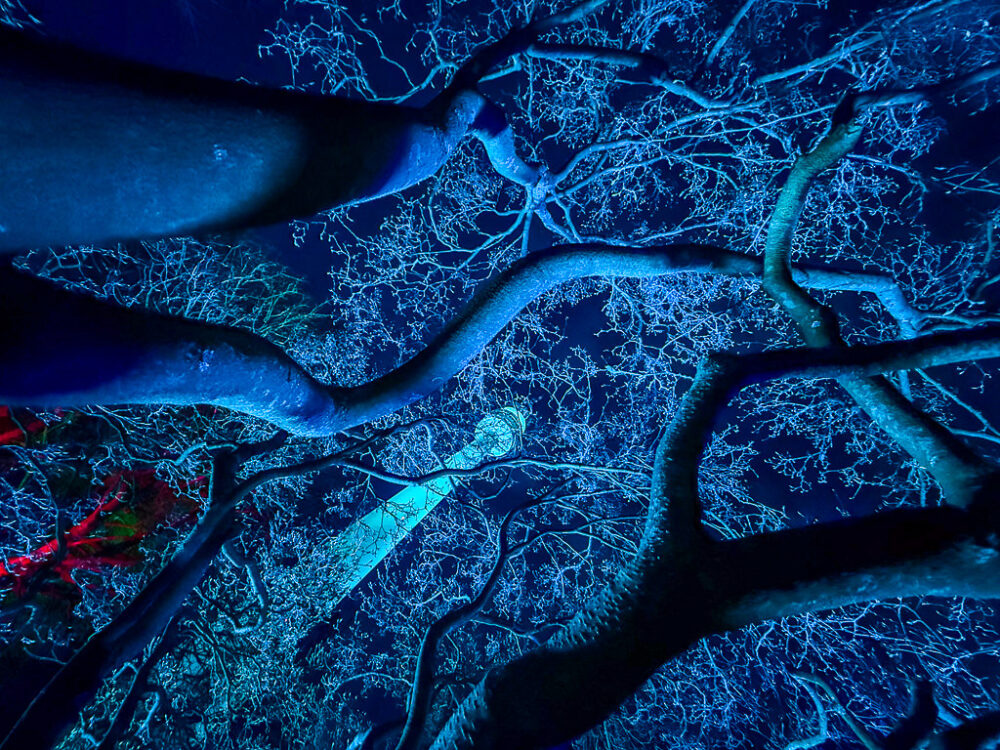
The park is illuminated every December. I’m usually not happy with it because the harsh light washes out the illuminated areas in the dark. This time, however, I left the concrete path and discovered an interesting perspective.

The park is illuminated every December. I’m usually not happy with it because the harsh light washes out the illuminated areas in the dark. This time, however, I left the concrete path and discovered an interesting perspective.
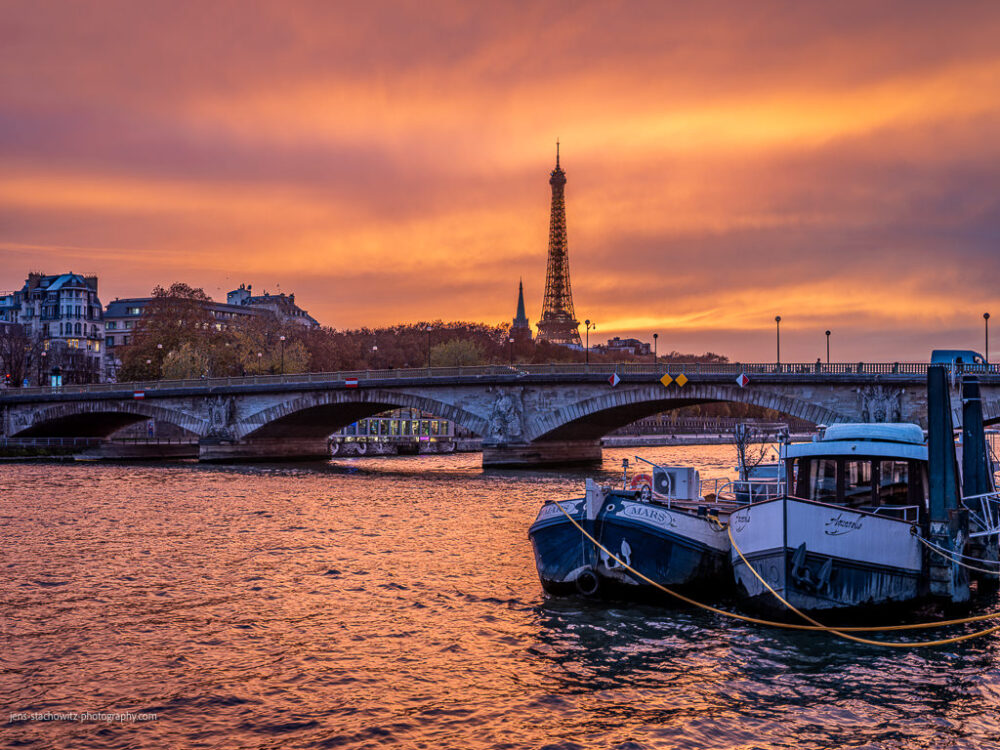
Fortunately we walked home by foot along the river bank of the Seine coming from the Paris Photo Fair and so we saw the sun lightening the clouds.
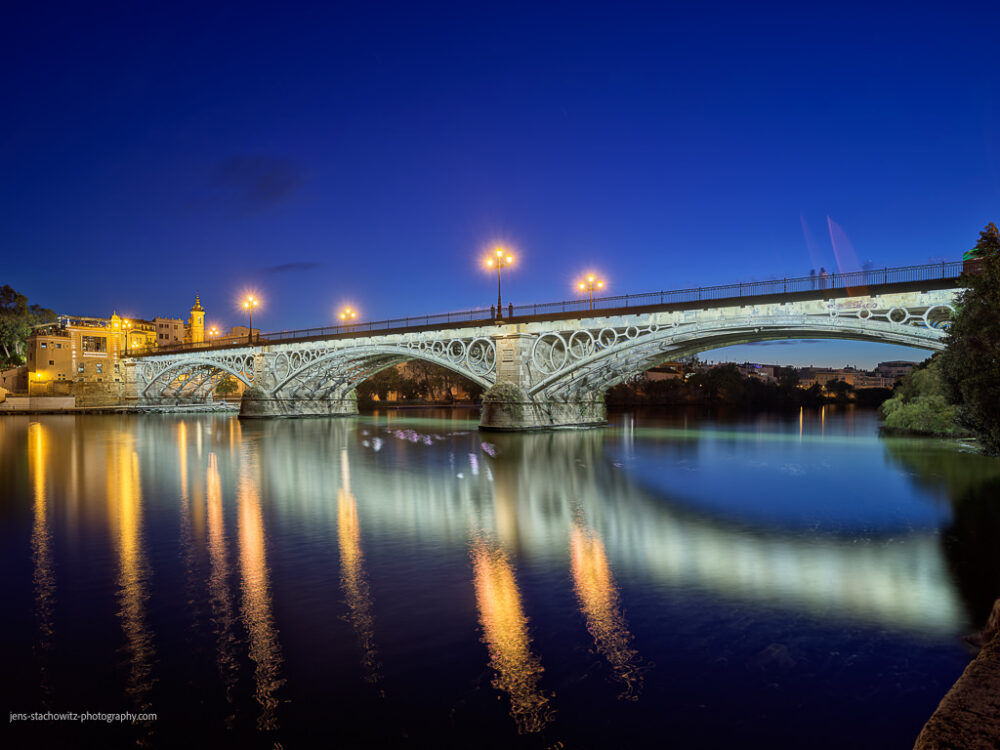
The Puente de Isabel II, commonly known as Puente de Triana, is a historic iron bridge in Seville, Spain. It connects the city’s old town with the Triana neighborhood across an old arm of the Guadalquivir River. The bridge spans 136.5 meters with three iron arches and two stone piers, making it Spain’s oldest surviving iron bridge.
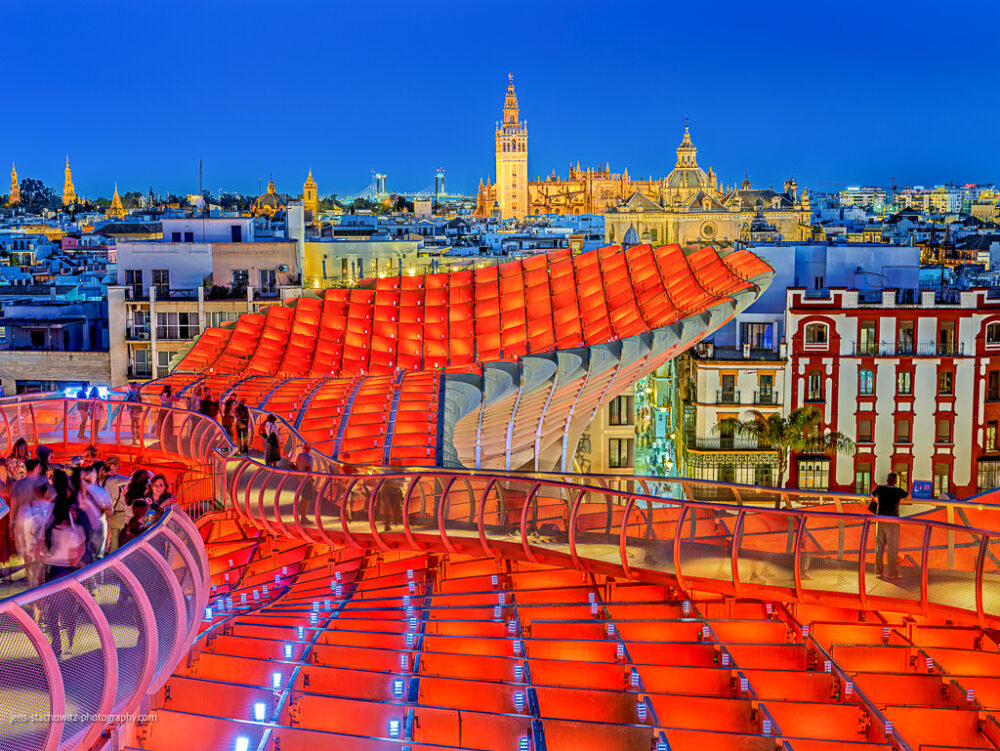
Setas de Sevilla, also known as Metropol Parasol, is a striking wooden architectural structure resembling giant mushrooms in Seville’s Plaza de la Encarnación. Designed by German architect Jürgen Mayer, it spans 150 meters long, 70 meters wide, and up to 26 meters high, making it one of the world’s largest wooden structures.
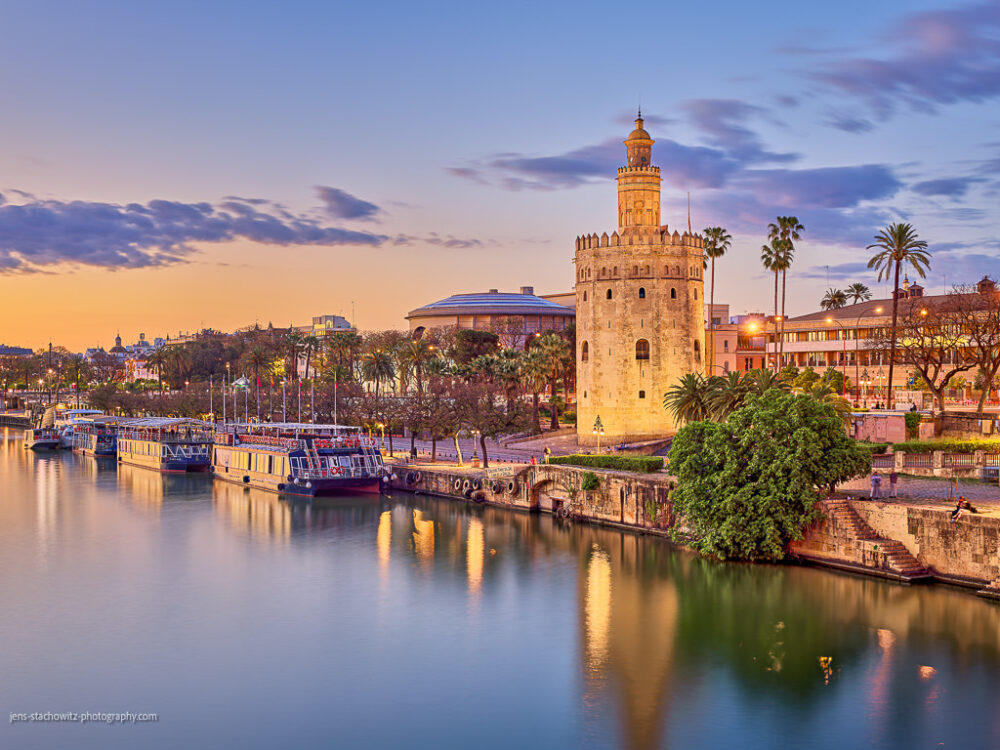
The Torre del Oro is a historic 13th-century watchtower in Seville, Spain, built by the Almohad dynasty to control river access on the Guadalquivir.

Luckily she stays still so I can show you the beauty and the complex structure of her body.

Enduring rainfalls for weeks caused floddings all over the more nothern parts Germany in December 2023. Here in Ruhrort, where the floodplains usually are a leisure area, the lanterns shine, although the area is not accessible, but they bathe the scene in a beautiful light.

There are many buildings with style in Antwerp. This former shop has a front with ceramic tiles, a huge window and a great window with stained glass from the art déco era.

The current Royal Vlaamse Opera Antwerp building was opened in 1907 and can host 1000 guests. The architectural design comes from Alexis Van Mechelen and Emiel Van Averbeke. Next to the Opera there is a large building, the Antwerp Tower, a former office building transformed by Wiel Arets Architects to a residential building on the upper floors. The Belgian national road 1 in front of the Opera was relocated to a tunnel to make place for the pedestrians.

The port of Antwerp is huge and is now closer to the North Sea than it was centuries ago, when ships docked in the middle of the city. This part of the harbor, called Kattendijk Dock, was used until the end of the 20th century and then became part of the city.